


Pregnancy brings incredible changes to your body, but not every new ache, pressure, or twinge is something you should simply learn to live with. As your baby grows, you may notice discomfort in your lower abdomen, hips, pelvis, groin, or lower back. Some of these sensations are common during pregnancy, while others deserve a closer look.
So, how do you know what’s normal and when to seek help?
At Poised Pelvic Society, we believe you deserve to feel informed, supported, and comfortable asking questions about your body. Understanding the difference between common pregnancy-related discomfort and symptoms that need medical attention is an important step toward caring for yourself and your growing baby.
What Causes Pelvic Pain During Pregnancy?
Your body goes through significant physical and hormonal changes throughout pregnancy. As your uterus grows, your center of gravity shifts, your abdominal muscles stretch, and the muscles and joints around your pelvis adapt to support your changing body.
Hormonal changes also affect connective tissues and joint mobility. Meanwhile, your pelvic floor muscles—which support your bladder, bowel, and uterus—continue to play an important role as your body accommodates pregnancy.
These changes can contribute to pelvic discomfort, but pelvic pain is not something you have to ignore just because you’re pregnant. Understanding the cause of your symptoms can help you find appropriate relief.
Common Types of Pelvic Pain During Pregnancy
Some discomfort is common during pregnancy, particularly as your baby grows. Here are a few experiences you may recognize.
1. Round Ligament Pain
Round ligament pain is a common cause of discomfort, particularly during the second trimester. The round ligaments support your uterus, and as the uterus grows, these ligaments stretch.
You may notice:
- A sharp, pulling, or stabbing sensation on one or both sides of your lower abdomen.
- Discomfort when standing up quickly, coughing, sneezing, or changing positions.
- Pain that lasts briefly and improves with rest or slower movements.
Although round ligament pain is often harmless, severe, persistent, or worsening pain should be evaluated by your healthcare provider rather than automatically attributed to ligament stretching.
2. Pelvic Girdle Pain
Pelvic girdle pain (PGP) affects the joints and surrounding structures at the front or back of your pelvis. It can develop as your body adapts to the physical demands of pregnancy.
Symptoms may include:
- Pain around the pubic bone or groin.
- Aching near the sacroiliac joints, where your pelvis meets your lower spine.
- Discomfort when walking, climbing stairs, or standing on one leg.
- Pain when rolling over in bed, getting dressed, or getting in and out of a car.
Pelvic girdle pain can range from mild to significantly limiting. If it affects your daily activities, a pelvic floor physical therapist can help assess your movement patterns and develop strategies to make everyday tasks more comfortable.
3. Hip and Lower Back Discomfort
As your posture and weight distribution change, your hips, glutes, abdominal muscles, and lower back may experience additional strain.
You might notice stiffness after sitting for a long time, soreness after walking, or discomfort when trying to find a comfortable sleeping position.
Gentle movement, supportive positioning, and individualized exercises may help. If your pain is persistent or interferes with sleep, mobility, or daily activities, talk with your healthcare provider.
4. Pelvic Pressure and Heaviness
As pregnancy progresses, increased pressure in the pelvis can be a common experience. You may feel heaviness or fullness in the vaginal or pelvic area, especially after standing for a long time.
However, new or significant pelvic pressure—particularly when accompanied by cramping, backache, bleeding, fluid leakage, or contractions—should not be dismissed as a normal part of pregnancy. Contact your maternity care team promptly, especially if you are before 37 weeks.
Pelvic Pain During Pregnancy: When Is It NOT Normal?
Although many pregnancy-related aches are common, certain symptoms need prompt medical attention.
Seek emergency medical care for severe or sudden abdominal or pelvic pain, fainting, significant dizziness, heavy vaginal bleeding, or pain accompanied by shoulder-tip pain. These can be signs of a serious condition, including an ectopic pregnancy early in pregnancy.
Contact your OB-GYN or maternity care team immediately if you experience:
- Vaginal bleeding or fluid leaking from the vagina.
- Regular contractions, cramping, or pelvic pressure before 37 weeks.
- Severe, persistent, or worsening abdominal or pelvic pain.
- Fever or chills alongside pelvic pain.
- Painful urination, blood in your urine, or other symptoms that could indicate a urinary tract infection.
- A noticeable decrease in your baby’s usual movements once you are at the stage of pregnancy when you regularly feel movement.
Do not wait for a physical therapy appointment to address these symptoms. Your obstetric care team can determine whether further evaluation is needed.
When in doubt, call your healthcare provider. You know your body, and you deserve to have your concerns taken seriously.
Can Pelvic Floor Physical Therapy Help During Pregnancy?
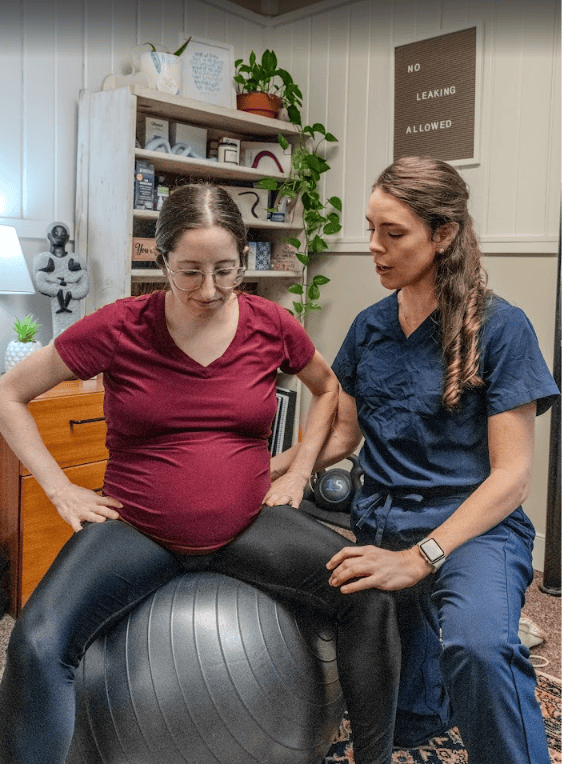
Yes! Pelvic floor physical therapy can be a valuable resource for many people experiencing pregnancy-related pelvic pain, with treatment tailored to your symptoms, pregnancy stage, and medical needs.
Your pelvic floor muscles do more than support your pelvic organs. They also coordinate with your breathing, abdominal muscles, hips, and back to support movement and manage pressure.
During pregnancy, these muscles may be overly tense, weak, poorly coordinated, or working harder than usual. More strengthening isn’t always the answer. Some people benefit from learning to relax and lengthen their pelvic floor muscles, while others need improved strength, coordination, or movement strategies.
A pelvic floor physical therapist may help with:
- Pain management: Identifying contributing factors and developing strategies to reduce discomfort.
- Movement and body mechanics: Modifying activities such as walking, lifting, getting dressed, and getting in and out of bed.
- Breathing and pressure management: Learning to coordinate breathing and muscle activity during everyday movements.
- Pelvic floor awareness: Understanding how to contract and relax your pelvic floor appropriately.
- Individualized exercise: Building strength, mobility, and endurance with pregnancy-appropriate exercises.
- Birth preparation: Learning relaxation, breathing, and pelvic floor coordination techniques that may support labor and delivery.
Your therapist will tailor treatment to your needs and coordinate with your medical team when appropriate. Internal pelvic examinations or treatment are not automatically necessary and should only be considered when clinically appropriate, with informed consent and any needed medical clearance.
You do not need to wait until after delivery to seek pelvic floor physical therapy. If pain is affecting your quality of life, ask your healthcare provider whether an evaluation during pregnancy is appropriate.
What Can You Do at Home to Ease Pregnancy-Related Pelvic Pain?
If your healthcare provider has determined that your symptoms are not a sign of a more serious problem, a few adjustments may help you feel more comfortable.
Try these strategies:
- Change positions regularly. Avoid staying in one position for too long, and take breaks when standing or sitting becomes uncomfortable.
- Move with intention. Try smaller steps, move slowly when changing positions, and keep your knees relatively together when getting in and out of bed or a car if those movements trigger pain.
- Use supportive positioning. A pillow between your knees or under your abdomen may make side-sleeping more comfortable.
- Explore gentle movement. Walking, swimming, or pregnancy-appropriate mobility exercises may help if they feel comfortable and your medical team has not advised otherwise. Stop activities that worsen your pain.
- Avoid pushing through discomfort. Modify tasks that aggravate your symptoms, and ask for help with lifting or other demanding activities when needed.
- Ask about additional support. Your healthcare provider or physical therapist can advise whether a pelvic support belt, individualized exercises, or other strategies may be appropriate.
These suggestions are not a substitute for medical evaluation. If your pain is new, worsening, severe, or accompanied by warning signs, seek medical advice before trying to manage it at home.
You Don’t Have to Just “Deal With It”
Pregnancy may bring physical discomfort, but that doesn’t mean every ache or limitation should be accepted without support.
Whether you’re experiencing sharp pains when changing positions, difficulty walking because of pelvic pressure, or persistent discomfort around your hips and lower back, there are professionals who can help you understand what’s happening and explore appropriate treatment options.
At Poised Pelvic Society, we support patients through every stage of their pelvic health journey, including pregnancy. Our approach focuses on understanding your symptoms, helping you move with greater confidence, and providing individualized care for your changing body.
You deserve to feel supported throughout pregnancy—not just told to push through the pain.
If pelvic discomfort is affecting your daily life, talk with your OB-GYN or midwife and consider whether pelvic floor physical therapy may be right for you.
Ready to learn more about pelvic floor physical therapy? Contact Poised Pelvic Society to explore your options.
Medical disclaimer: This article is for educational purposes only and does not replace individualized medical advice, diagnosis, or treatment. Contact your healthcare provider about pregnancy-related symptoms, and seek urgent care for emergency warning signs.


