


When you picture recovering from a C-section, you might imagine the incision healing, taking it easy for a few weeks, and gradually getting back to your normal routine.
But what if recovery feels more complicated than that?
A C-section is both a birth experience and major abdominal surgery. While the focus is understandably on your new baby, your body is also working hard to heal. You may experience soreness, fatigue, changes in sensation, difficulty moving, or simply feel like your body doesn’t quite work the way it used to.
And here’s something many people don’t realize: having a C-section doesn’t mean you’re automatically exempt from pelvic floor concerns.
Pregnancy alone places significant demands on the pelvic floor, abdominal muscles, hips, and back. Add surgery and postpartum life into the mix, and your body has a lot to manage!
Let’s talk about some of the things no one always tells you about C-section recovery.
Your Recovery Doesn’t End When You Leave the Hospital
Getting discharged from the hospital can feel like a major milestone. Your baby is home, you’re home, and now you can finally settle into your new routine.
Except…you just had surgery.
Your body is still healing, and you’re simultaneously caring for a newborn who needs to eat every few hours, be carried, changed, soothed, and held.
It’s completely normal for this transition to feel physically challenging.
You may notice that getting in and out of bed takes more effort than expected. Walking around the house may leave you tired. Picking up your baby or carrying a car seat may feel uncomfortable.
Your recovery isn’t a race. Following your healthcare provider’s recommendations for lifting, driving, exercise, and other activities is important—and so is giving yourself permission to slow down.
The Incision Isn’t the Only Thing Healing
It’s easy to think of the C-section incision as the primary focus of recovery because it’s the most visible reminder of the surgery.
But there is much more happening beneath the skin.
A C-section involves several layers of tissue, and those tissues need time to heal. As your body recovers, you may notice numbness, tingling, tenderness, itching, tightness, or a pulling sensation around the scar.
Some changes may gradually improve as healing progresses. Others may linger.
Your scar is also more than a line on your abdomen. The surrounding tissues can become sensitive or feel restricted as the body heals. That’s one reason scar care can be an important part of postpartum rehabilitation when appropriate.
Your Pelvic Floor Still Went Through Pregnancy
Here’s one of the biggest misconceptions about C-sections:
“I didn’t have a vaginal birth, so I don’t need to worry about my pelvic floor.”
Not necessarily.
Your pelvic floor supported you throughout pregnancy. As your uterus grew and your body changed, the pelvic floor adapted to increased weight and pressure. Pregnancy hormones also affect your muscles and connective tissues.
Your posture, breathing patterns, abdominal pressure, and movement patterns can change throughout pregnancy, too.
So even if your baby was delivered via C-section, your pelvic floor has still been part of the pregnancy journey.
You May Still Experience Pelvic Floor Symptoms
Pelvic floor concerns aren’t limited to vaginal birth.
After pregnancy and a C-section, some people experience symptoms such as:
- Urinary leakage or urgency
- Difficulty emptying the bladder
- Constipation
- Pelvic pressure or heaviness
- Pain with intercourse
- Pelvic or abdominal discomfort
- Hip or low-back pain
- Difficulty returning to exercise
- A feeling of weakness or instability through the core
You don’t have to experience all—or even any—of these symptoms. But if something doesn’t feel right, it’s worth talking with your healthcare provider or a pelvic floor physical therapist.
You do not have to simply accept discomfort as your new normal.
Your Core May Feel…Different
Your core isn’t just your abdominal muscles.
Think of your deep core as a team that includes your diaphragm, abdominal muscles, back muscles, and pelvic floor. Together, these muscles help manage pressure and provide stability as you move.
After a C-section, you may feel disconnected from your core or unsure how to engage those muscles.
Simple activities can suddenly feel very different:
- Getting out of bed
- Standing up from a chair
- Coughing or sneezing
- Picking up your baby
- Carrying a car seat
- Going up and down stairs
- Returning to exercise
That’s not a sign that you’ve failed at recovery. Your body has been through a significant physical event.
Instead of immediately trying to get back to your previous workouts, postpartum recovery should focus on gradually rebuilding strength, coordination, and confidence.
Scar Tissue Can Affect More Than Appearance
Your C-section scar may eventually become a small, barely noticeable line—or it may remain more prominent. Either way, what you see on the outside doesn’t necessarily tell you what’s happening underneath.
Scar tissue can sometimes feel tight, sensitive, numb, itchy, or uncomfortable. Some people notice that certain movements pull around the scar or that the surrounding skin doesn’t move the way it used to.
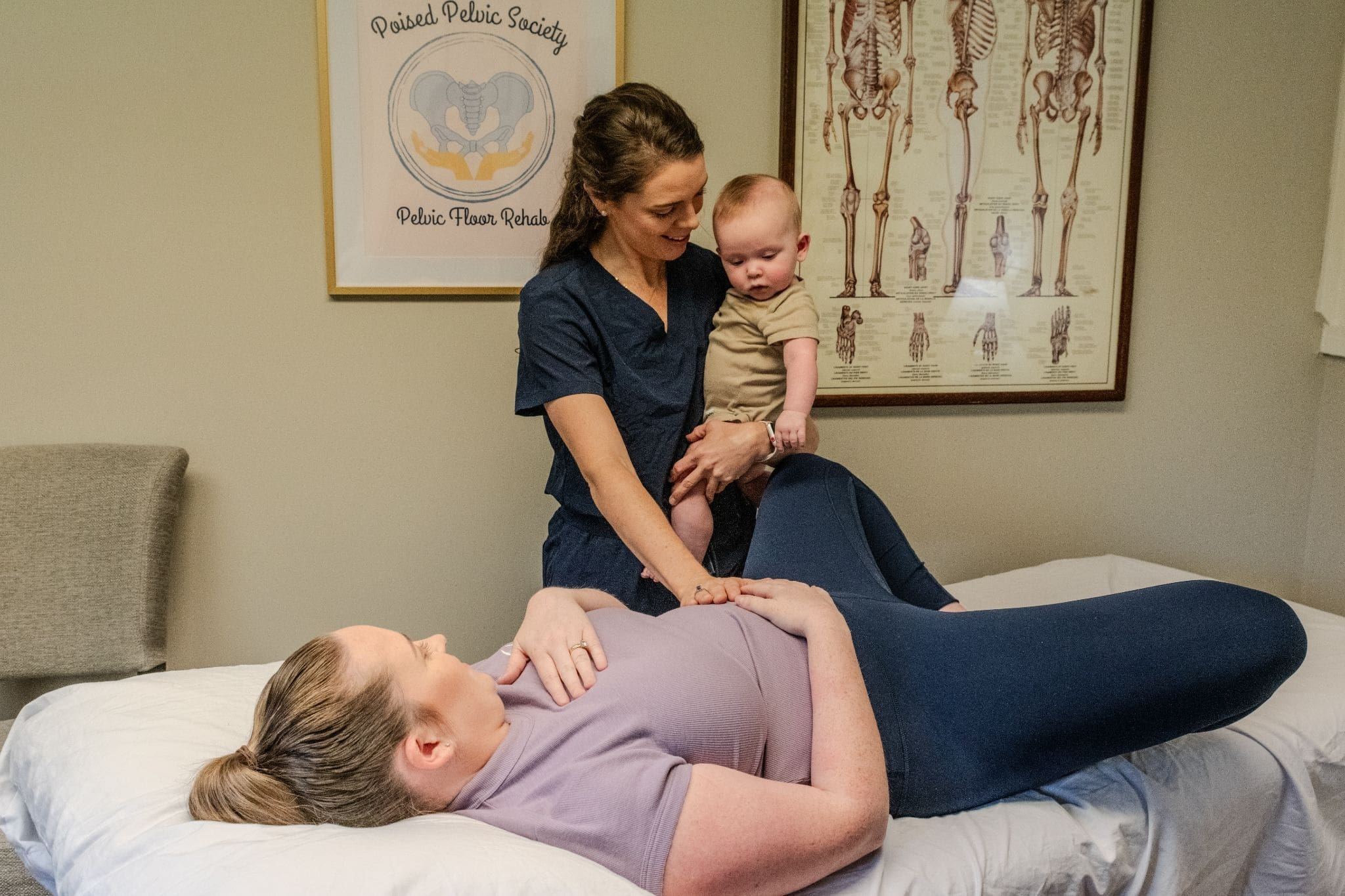
Once the incision has appropriately healed, a pelvic floor physical therapist can assess the scar and surrounding tissues and determine whether scar mobility work may be beneficial. Scar mobilization is a hands on technique used to massage and stretch healing scar tissue to reduce tightness or pain, break up internal adhesions and help skin move freely again after surgery.
The goal isn’t simply to make the scar look different.
It’s about helping you feel comfortable and move confidently in your body.
Bowel Movements Can Be Surprisingly Difficult
No one really wants to talk about postpartum bowel movements.
But we should.
Constipation can be common after birth and surgery. Changes in activity, medications, hydration, diet, and your daily routine can all play a role.
And when you’re already sore, the thought of straining during a bowel movement can be intimidating.
Because your pelvic floor plays an important role in bowel function, persistent constipation or difficulty emptying your bowels is something worth discussing with your healthcare provider.
Your postpartum recovery includes more than your incision. Your bathroom habits matter, too.
Even Sneezing Can Become an Event
After abdominal surgery, seemingly simple movements can feel surprisingly uncomfortable.
Coughing, sneezing, laughing, rolling over in bed, or getting up from a lying position may cause you to brace your abdomen or protect your incision.
Learning how to move your body strategically during the early stages of recovery can make everyday activities more comfortable.
For example, rather than trying to sit straight up from bed, you may find it more comfortable to roll onto your side first and use your arms to help push yourself up.
These adaptations aren’t forever. They’re tools to help you work with your healing body instead of fighting against it.
Sex and Intimacy May Feel Different, Too
Postpartum recovery doesn’t end with your incision healing—and intimacy deserves a place in the conversation.
Even after a C-section, you may experience changes that affect intimacy, including hormonal changes, vaginal dryness, fatigue, abdominal discomfort, scar sensitivity, or pelvic floor tension.
You may also simply not feel ready.
There is no prize for rushing back to intimacy before you’re comfortable.
If sex is painful or you’re experiencing discomfort, don’t assume you just have to live with it. Talk with your healthcare provider or pelvic floor physical therapist. Pain is information from your body, not something you have to ignore.
You Don’t Have to Wait Until Something Is “Wrong”
One of the biggest misconceptions about physical therapy is that you need to be injured or experiencing significant pain before making an appointment.
That’s not necessarily the case.
A pelvic floor physical therapist can help you understand how your body is functioning after pregnancy and birth and help you develop a plan for moving forward.
Depending on your individual needs, treatment may address:
- Core coordination
- Pelvic floor function
- Scar mobility
- Posture and body mechanics
- Breathing and pressure management
- Strength and mobility
- Returning to exercise
- Pain or discomfort
- Confidence with movement
Your treatment should be personalized to you, your birth experience, your symptoms, and your goals.
What Can You Expect From a Pelvic Floor PT Evaluation?
If you’ve never seen a pelvic floor physical therapist, you may be wondering what actually happens during an appointment.
Your first visit typically starts with a conversation.
Your therapist may ask about your pregnancy, delivery, symptoms, daily activities, exercise goals, and what you’re hoping to accomplish. From there, they can assess things such as movement, posture, breathing, abdominal function, and pelvic floor coordination.
Your C-section scar may also be assessed when appropriate and once healing has progressed enough to safely do so.
Most importantly, you’ll have an opportunity to ask questions and understand what’s happening in your body.
The goal isn’t to give you a generic list of postpartum exercises.
It’s to create a plan that makes sense for you.
If interested in learning more about pelvic floor physical therapy, book a discovery call with the Poised Pelvic Society to discuss your symptoms, ask questions and begin your healing journey.
Your Body Deserves Recovery, Too
Having a baby can bring an incredible amount of joy—and an incredible amount of physical change.
It’s easy to put your own recovery on the back burner while you’re focused on feeding, changing, soothing, and caring for your new baby. But taking care of yourself isn’t selfish. It’s part of taking care of your family.
A C-section scar may heal on the outside before you feel completely recovered on the inside. Your core may feel different. Your pelvic floor may need attention. Your confidence in your body may take time to return.
That’s okay.
Postpartum recovery isn’t about getting back to the body you had before. It’s about helping your body become strong, comfortable, and confident for the life you’re living now.
If you’ve had a C-section and aren’t sure whether what you’re experiencing is part of normal recovery—or if you simply want support getting back to the activities you love—Poised Pelvic Society is here to help.
Your recovery deserves attention, too.


